

Dhammacakkapavattana Sutta : ค้นหาหนังสือธรรมะ หน้า 2 / 2
หน้าหนังสือทั้งหมด
49
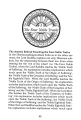
The Artistry Behind Preaching the Four Noble Truths
3
The Four Noble Truths
The Artistry Behind Preaching the Four Noble Truths
In the Dhammacakkapavattana Sutta as in his other sermons, the Lord Buddha explains not only Dhamma subjects, but the relationship be…
In the Dhammacakkapavattana Sutta, the Lord Buddha presents the Four Noble Truths, emphasizing their interconnected nature. Each Nobl…
106
Understanding the Middle Way in Dhamma Practice
… Wat Paknam explained how we can know we are practicing the Middle Way in the sermon he gave on the Dhammacakkapavattana Sutta on 3 January 1955. He explained that the word ‘Middle’ in the term ‘Middle Way’ is indeed used in a…
In his sermon on the Dhammacakkapavattana Sutta, Luang Phaw Wat Paknam elucidates the profound significance of the Middle Way, urging practitioners…
180
The Life of Koṇḍañña and His Journey to Enlightenment
…e able to attain the fruit of “stream-entry” at the moment the Buddha completed his teaching of the Dhammacakkapavattana Sutta. This goes further to show the superiority of the Buddha’s attainment over the teaching of other co…
…d high attainments in other traditions, to realize 'stream-entry' upon the Buddha's teaching of the Dhammacakkapavattana Sutta. This establishes the supremacy of the Buddha's teachings over contemporary spiritual practices, hi…

184
The Path to Sainthood According to Buddhism
…, if we take rebirth in heaven or the Brahma world, we may, like the eighteen crore1 Brahmas of the Dhammacakkapavattana Sutta, attain Sainthood along with the first disciple.
1. One crore, according to the ancient Indian num…
…ot, there's potential for rebirth in heavenly realms, akin to the 18 crore Brahmas mentioned in the Dhammacakkapavattana Sutta, ultimately leading to Sainthood alongside the first disciple. This illustrates the continuity of s…
197
The Middle Way: Buddha's Revolutionary Teaching
…didn’t just deny what had gone before — he offered a correct alternative. Normally this part of the Dhammacakkapavattana Sutta is just translated:
“Avoiding both of these extremes, the Middle Way realized by the Tathagata — pr…
… a correct alternative that leads to calm and supreme knowledge. His teachings, particularly in the Dhammacakkapavattana Sutta, outline a path towards enlightenment that avoids the extremes of experience.
207
The Liberation and Enlightenment of Koññña
…w the Four Noble Truths in the human physical body. The outcome of his attainment (and hence of the Dhammacakkapavattana Sutta) was that Koñañña attained Stream-Entry with the realization that:
"Whatever thing is of a nature t…
…Buddha's teachings, asserting that they cannot be denied by anyone in existence. The outcome of the Dhammacakkapavattana Sutta is crucial in understanding the deeply interconnected realms of existence and enlightenment.
220
Exploring the Path to Enlightenment in Buddhism
101; enlightenment mechanism, chanting, Dhammacakkapavattana explained by Dhammakaya 111; Sutta 10-11, 209-16 knowledge arising to reach enlightenment 140-1; practice 94, metaphors: dog and lion 94; g
…o various aspects of Buddhism, focusing on the mechanisms of enlightenment through chanting and the Dhammacakkapavattana Sutta. The practices necessary for attaining enlightenment are described, along with metaphors illustrati…
222
Understanding Dhammakāya and Defilements in Meditation
…t to Nirvana 43; vehicle to trans-
port us to Nirvana 185-6; weapon
to execute defilements 176, 185
Dhammacakkapavattana Sutta
15ff., 27ff.: as master plan 10, 186,
189-90; brevity of 183; chanting of
10-11, 209-16; concerns r…
… and its significance in guiding practitioners towards liberation, along with the importance of the Dhammacakkapavattana Sutta in elucidating the path to Nirvana. The text intricately connects meditation practices with insight…
34
Understanding Dhammakāya in Early Buddhist Thought
II. The Different Approach
A fairly established academic understanding has settled regarding the term dhammakāya in the Pali canon, that it was used merely in the sense of the ‘Buddha’s teachings.’ In
The term 'dhammakāya' in the Pali canon is understood as representing the Buddha's teachings. It is established through several canonical passages that equate the Buddha with dhamma. Notable reference
31
Dhammacakkappavattana Sutta: The Sermon
Dhammacakkappavattana Sutta:
The Sermon
Something which you will find at the beginning of every sutta are Aṅanda’s words 'Evam.e sutam...': i.e. ‘Thus have I heard (directly from the Lord Buddha)
The Dhammacakkappavattana Sutta begins with Aṅanda's phrase 'Thus have I heard' and recounts the Buddha's teachings delivered at the Isipatana Deer Park. The Blessed One addresses the group of five mo
183
Awakening Through Practice: The Path to Sainthood
…up to a level of Perfections superior to those of his contemporary monks. Consequently, hearing the Dhammacakkapavattana Sutta, Koṇḍañña was awakened before his contemporaries — he was to attain sainthood before his other four…
In the narrative of Koṇḍañña's journey, we see how individual Perfections and good deeds lead to his early awakening, inspiring both him and his companions to deeper faith and dedication in their prac
251
60+ Books on Buddhist Principles and Thai Tradition
…, Merit on One’s Birthday (Thai), Respecting One’s Teacher (Thai), The Secretary’s Handbook (Thai), Dhammacakkapavattana Sutta (Thai), Jataka Stories on Women (Ithi)(Thai), To Pursuers of Perfection 1-3 (Thai), The True Monk (…
This collection features works authored or compiled by an expert in Buddhist philosophy and Thai traditions. The titles span various themes including virtues of a monarch, Buddhist ways to overcome ob
36
References to 'Dhammakāya' in the Pāli Canon
III. References to 'Dhammakāya' in the Pāli Canon
In the Pali canon, the term dhammakāya appears four times: once in the Aggiāṇā-sutta of the Dīgha-nikāya and three more times in Apadāna literature.
In the Pāli Canon, the term 'dhammakāya' is found four times, significantly in the Aggiāṇā-sutta and Apadāna literature. It serves various roles including a designation for the Tathāgata and associati
37
Exploring the Concept of Dhammakāya in the Aggañña-sutta
IV. Reference 1: Dhammakāya as the Tathāgata’s Designation
The first Pali reference to the term dhammakāya that is well known to all previous works is a passage in the Aggañña-sutta, wherein the term
This text discusses the term 'dhammakāya' as referenced in the Aggañña-sutta, emphasizing its importance in defining an heir of dhamma and the Tathāgata’s true son. The conversation between the Buddha
39
Interpretations of Dhammakāya in Early Pāli Texts
Gombrich, while differently translating the term in this passage as a bahubbiha compound 'dhamma-bodied,' similarly interprets it as an indication that the Buddha's true import is due to 'his teaching
This text delves into various scholars' interpretations of the term 'dhammakāya' within the context of early Pāli suttas. Gombrich views it as 'dhamma-bodied,' emphasizing that the essence of the Budd
40
Understanding Dhammakāya in Aṅgāṇā-sutta
In brief, contemporary academics refer to the term dhammakāya in the Aṅgāṇā-sutta either as a noun or an adjective. As a noun, the term is interpreted mostly as the Buddha’s teachings collected togeth
The term dhammakāya is interpreted in contemporary academia as both a noun and an adjective. As a noun, it denotes the Buddha’s teachings, while as an adjective, it refers to the nature of the Tathāga
71
Understanding Dhammakāya and Enlightenment
1. The term dhammakāya is related to enlightenment. This agrees with our earlier observation regarding the relation of ‘dhammakāya’ to the Buddha and Paccakabuddhas.
2. Dhammakāya is not exclusive to
The term 'dhammakāya' signifies enlightenment and is not exclusive to the Buddha but can also be attained by his disciples, as indicated by Gotami's reference to 'my dhammakāya.' This term is interpre
6
Payasi Sutta: Rebirth and Karma
This Life Next Life
Payasi Sutta
(Rebirth and Karma)
Thus have I heard.
1. The venerable Kumara Kassapa¹ was once walking on tour in Kosala together with a great company of bhikkhus, to the number o
The Payasi Sutta recounts the teachings of venerable Kumara Kassapa during his time in Setavya. It narrates the challenges faced by Payasi, a chieftain in this city, as he grapples with misconceptions

38
The Virtue of Abstaining in Dakhina-vibhanga Sutta
The Virtue of Abstaining
6. Dakhina-vibhanga Sutta
the virtues loved by noble ones.24 It is owing to the Blessed One that Mahā paja pārī Gotāmī is free from doubt about suffering, about the origin of
The Dakhina-vibhanga Sutta highlights the significance of abstaining from harmful actions such as killing and immoral conduct. It illustrates how one's journey towards refuge in the Buddha, Dhamma, an

40
The Verse of Abandoning: Dakkhināvíbhanga Sutta
The Verse of Abandoning
6. Dakkhināvíbhanga Sutta
"When one person, owing to another, has come to possess unwavering confidence in the Buddha, the Dhamma, and the Sangha, and to possess the virtues
The Dakkhināvíbhanga Sutta emphasizes the significance of unwavering confidence in the Buddha, Dhamma, and Sangha. It illustrates how one person's faith and understanding can be influenced by another,